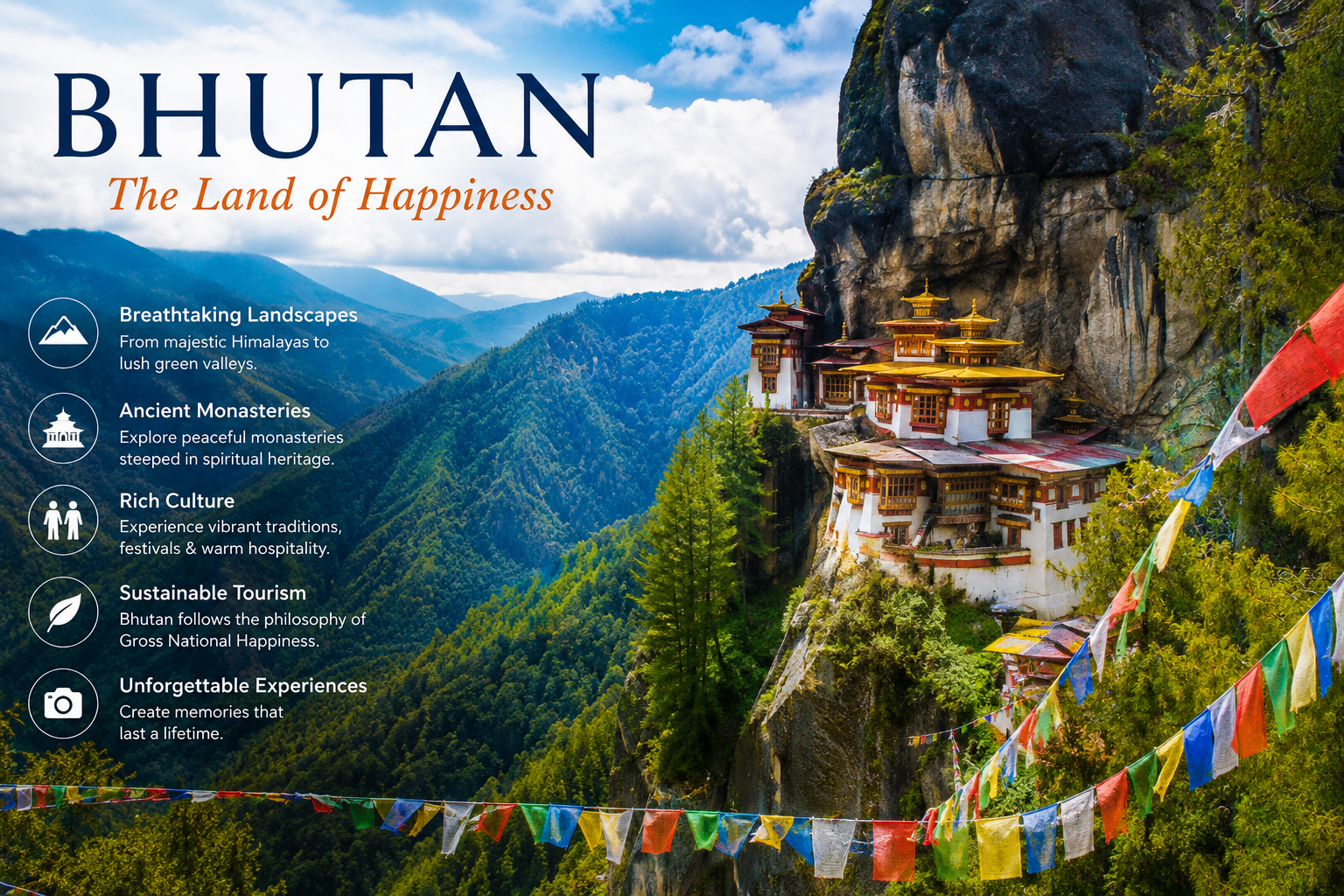
Most countries measure success through economic growth, industries, and infrastructure. Bhutan chose a different path.
Instead of focusing only on Gross Domestic Product (GDP), Bhutan introduced Gross National Happiness (GNH)—a philosophy that prioritizes the well-being of its people, protection of nature, cultural preservation, and sustainable development.
For travelers, this isn’t just an interesting fact. It’s something you’ll experience throughout your journey.
From the moment you cross into Bhutan, everything feels different. The roads are quieter, the mountains are cleaner, the traditions are alive, and people genuinely smile at strangers.
If you’re wondering why Bhutan has become one of the world’s most unique travel destinations, the answer lies in Gross National Happiness.
What is Gross National Happiness?
Gross National Happiness (GNH) is Bhutan’s development philosophy introduced by the Fourth King, Jigme Singye Wangchuck.
Instead of asking:
“How rich is the country?”
Bhutan asks:
“How happy are its people?”
This approach balances:
- Sustainable economic growth
- Environmental conservation
- Cultural preservation
- Good governance
This philosophy influences everything from tourism and education to forest conservation and community development.
Why Travelers Notice the Difference
Unlike many tourist destinations where rapid development has changed local culture, Bhutan has carefully protected its traditions.
Visitors often notice:
- Traditional architecture throughout cities
- Clean streets and fresh mountain air
- Peaceful monasteries
- Friendly local communities
- Limited commercialisation
- Respect for nature
The result is an authentic travel experience rather than an overcrowded tourist destination.
Tourism That Protects Nature
Bhutan follows a “High Value, Low Impact” tourism policy.
Instead of encouraging mass tourism, the country focuses on responsible travel that benefits local communities while protecting its environment.
Today:
- More than 70% of Bhutan remains covered in forests.
- Plastic pollution is relatively low.
- Wildlife habitats are carefully protected.
- Trekking routes remain clean and less crowded.
For nature lovers, this makes Bhutan one of Asia’s most sustainable destinations.
Culture Isn’t Preserved in Museums—It’s Part of Daily Life
In Bhutan, traditions are not performances for tourists.
You’ll see people wearing traditional dress to work, children learning cultural values in school, monks chanting in centuries-old monasteries, and festivals celebrated by entire communities.
Places like Paro, Thimphu, and Punakha beautifully combine modern life with ancient traditions.
Slow Travel at Its Best
Bhutan encourages travelers to slow down.
Instead of rushing through attractions, spend time:
- Walking through village streets
- Talking with local artisans
- Watching prayer flags flutter in the mountains
- Enjoying tea with valley views
- Exploring local handicraft markets
This slower pace is one of Bhutan’s greatest luxuries.
Nature Comes First
Bhutan is one of the few carbon-negative countries in the world.
Its rivers remain clean, forests thrive, and wildlife is protected.
Whether you’re driving through Dochula Pass, exploring Punakha Valley, or hiking toward Tiger’s Nest Monastery, you’ll notice how closely nature and daily life are connected.
A Different Kind of Luxury
Luxury in Bhutan isn’t about skyscrapers or shopping malls.
It’s about:
- Silence instead of traffic
- Sunrise over snow-covered mountains
- Ancient monasteries surrounded by forests
- Local food prepared with fresh ingredients
- Genuine hospitality
These experiences stay with travelers long after the journey ends.
Who Should Visit Bhutan?
Bhutan is ideal for:
- Couples looking for peaceful honeymoon destinations
- Families interested in culture and nature
- Solo travelers seeking meaningful experiences
- Photographers
- Adventure enthusiasts
- Spiritual travelers
- Luxury travelers looking for exclusivity
Planning Your Bhutan Journey
A 6–7 day itinerary is perfect for exploring Bhutan’s cultural highlights, including Phuentsholing, Thimphu, Dochula Pass, Punakha, and Paro, with opportunities to experience monasteries, mountain scenery, and local traditions
Final Thoughts
Bhutan doesn’t promise luxury in the traditional sense—it offers something increasingly rare: peace, balance, and authenticity. A journey here isn’t just about ticking off famous attractions; it’s about experiencing a country that has chosen happiness, sustainability, and cultural heritage as the foundation of its future.
For travelers seeking more than a vacation, Bhutan offers a perspective that is as memorable as its mountain landscapes.
Frequently Asked Questions
Is Gross National Happiness unique to Bhutan?
Yes. Bhutan is the only country that officially measures national progress using Gross National Happiness.
Does Gross National Happiness affect tourism?
Yes. Bhutan’s tourism policies focus on sustainability, cultural preservation, and responsible travel, creating a unique visitor experience.
Can families enjoy a Bhutan trip?
Absolutely. Bhutan is known for its safety, peaceful environment, and attractions suitable for travelers of all ages.
How many days should I plan for Bhutan?
A 6–7 day itinerary is ideal for first-time visitors to experience the country’s major cultural and natural highlights.
Why is Bhutan considered a sustainable destination?
Bhutan protects its forests, promotes responsible tourism, and prioritizes environmental conservation, making it one of the world’s most eco-conscious travel destinations.
Leave a Reply